
For years I have worked with various police forces on online diversity and inclusion, anti-racism and unconscious bias courses. Recent debate has seen that work blamed for poor or biased policing decisions. It isn’t easy to be challenged that your professional life has not benefited others. So I’ve gone to someone who gives me inspiration.
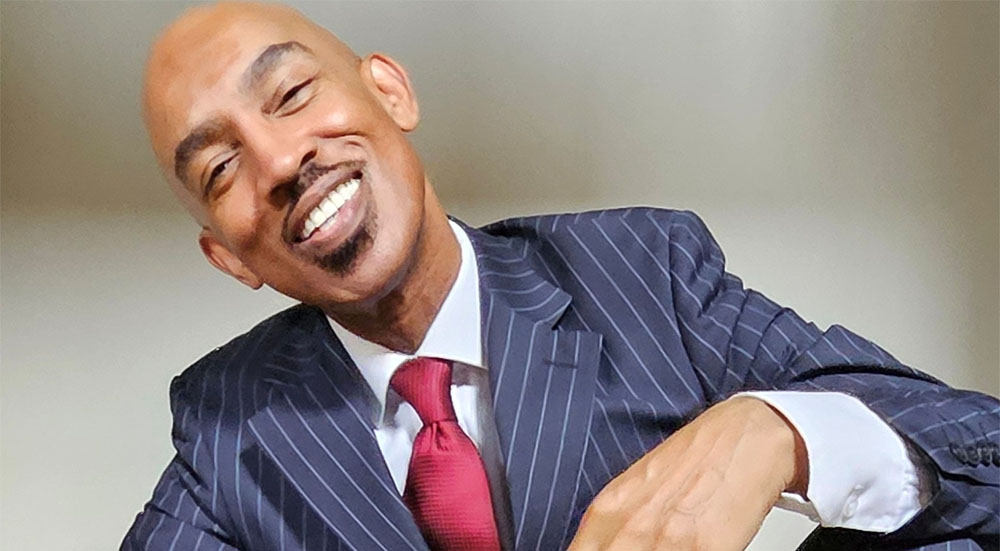
I first met Vernal Scott in Islington back in 2005, when he was working in equality and diversity at Islington Council and I was building Marshall E-Learning. He is the current EDI Manager at Leicestershire Police, a successful author and former Head of the Equality and Diversity Unit at Oxford University.
Vernal and I have since worked together on various projects. He is the most fantastic speaker and my clients loved working with him.
Since then Vernal has worked across local government, higher education and policing. His book, originally published as God’s Other Children, has now been updated and retitled UK Black. It is a deeply personal account of race, sexuality, family, resilience and public service..
I first met you in Islington back in 2005. Looking back, what do you remember about that period of your work?
You were ambitious about your company vision, and just as committed to EDI in your products and how you recruited staff.
As for my work then as Head of EDI at Islington Council, my ambition was to embed EDI principles into our everyday operations as a public service. We had political commitment, both internally and nationally.
You have worked in diversity and inclusion across local government, higher education and policing. What has changed most over that time — and what do you think has not changed enough?
It’s all very different today, with overt bigotry an everyday reality for many minority people.
Trump and his influence have taken us back to the oppressive 1970s, or even the 1950s, with the tide against LGBT visibility.
Personally, I have no intention of going back into the closet, and I am not alone in feeling this way.
When I think of you, I think of someone who brings energy into a room and makes difficult conversations feel possible. Is that something that comes naturally to you, or something you have had to develop?
If I’m in the room, I’m there for a purpose; usually to communicate a message or win buy-in.
Communication is one of my stronger talents, and it is natural. When I’m at a mic or podium, I use them well.
I go for hearts and minds and aim to make new connections at a human level. Being my authentic self really matters to me.
Your book God’s Other Children has been updated and is now titled UK Black. It now captures your role in policing and academia. It is very honest about your upbringing and much more. What made you decide to tell that story?
My Blackness is deeper than the skin I live in. It is always visible and cannot be “disappeared” like my sexual orientation. My history, visibility and mere existence are unavoidably political.
The visibility of my skin is not the problem; it’s the racist reaction and societal barriers that need fixing.
Yes, Black lives of course matter, but I won’t spend mine in perpetual reaction to racist BS. I am here to live, give, love and be as happily productive as possible.
If I let it, my victimhood will tie my hands and feet. No, I am going to stay woke and commit to taking the anti-racism challenge to the perpetrators, the complacent and the ignorant, but I don’t want to lose myself in the process.
My employment in policing is an example of me stepping outside of my safe space to plant seeds of equity in spaces not expecting me. Like those who came before me, I want to leave this world better than I found it, and I want to positively change things without them negatively changing me.
The process of writing proved intensely cathartic for me. At times, I found myself laughing out loud at sweet memories and then convulsing with what felt like tears of blood when the darker ones proved too painful to deal with.
There was too much hurt, too much fear, and far too much dying. Writing UK Black was an overdue healing of gaping emotional wounds.
One of the things that moved me about the book was the way it explores ethnicity, sexuality, family, resilience and belonging together. Do you think institutions are now better at understanding people as whole human beings?
In my experience, ensuring students of all backgrounds and identities feel genuinely included means moving beyond simply saying that everyone is welcome.
Real belonging is created when students experience respect, recognition, safety, opportunity and support in their everyday academic lives.
Institutions need to listen carefully to the lived experiences of diverse students and allow those experiences to shape real change. This means not assuming that one approach works for everyone, but instead asking students what barriers they face and taking their responses seriously.
The curriculum plays a major role in belonging. When students see themselves, their communities and different ways of knowing reflected in what they study, they are more likely to feel that they matter.
Belonging must also be reflected in the way staff interact with students. Small everyday actions can make a big difference: pronouncing names correctly, listening without assumptions, noticing who is being left out, and responding quickly when students ask for help.
Institutions also need to remove practical and structural barriers. This could include addressing hidden course costs, making learning materials accessible, supporting students who commute or have caring responsibilities, improving mental health and disability support, and ensuring academic advice is easy to access.
Support should not only be available when students are already struggling; it should be proactive, visible and normalised.
Most importantly, institutions need to be honest about whether their promises of belonging are matched by students’ real experiences.
In my view, belonging is not achieved when an institution says that students are included. It is achieved when every student can say: “I am valued here, I am supported here, and I have a fair chance to succeed here.”
You have worked in higher education, including at Oxford University. One of the things I worry about is that some students arrive at university but never quite find their place. They may not be in crisis, exactly, but they fall off the edge socially, emotionally or academically, and miss out on the university experience they hoped for. From your experience, what do universities need to understand better about belonging, identity and support?
Belonging cannot just be a statement of intent. Students need to feel it in their lectures, seminars, assessments, support services, social spaces and future opportunities.
To truly mean it, institutions must listen, act, measure progress and hold themselves accountable.
Do you think institutions sometimes wait until students are visibly struggling, rather than noticing the quieter signs that someone is becoming isolated?
Yes. Support should not only be available when students are already struggling; it should be proactive, visible and normalised.
Universities need to listen carefully, notice who is being left out and respond quickly when students ask for help.
Music runs through your story — Whitney Houston, Gloria Gaynor and others. What has music meant to you in your life?
Music has been a sanctuary — pop, reggae, disco, jazz, rock. I love music.
There’s always a song or piece of music to capture my mood. I was extremely fortunate to cross paths with George Michael, Whitney Houston, Gloria Gaynor, Luther Vandross, Dionne Warwick and more.
George and Whitney have a special place in my heart, as they supported my early work on HIV and AIDS.
In the past couple of weeks there has been a lot of public discussion about unconscious bias, inclusion training and policing. I’ve worked with various police forces on inclusion over the years, and it has made me pause and ask whether this work is always a net benefit. My instinct is that inclusion training is often misrepresented in the media, and that a genuine police mistake, failure or tragedy can quickly be pushed into a wider argument that “this happened because of inclusion training”. From your perspective, how should we think about this? What does good inclusion work in policing actually look like — and where can it go wrong?
We’ve all heard about the need to have courageous conversations. Well, we also need to engage in courageous, moral push-back.
The demonisation of EDI and people of colour is repugnant and morally bankrupt. Our work on EDI didn’t arrive out of nowhere: we suffered and still suffer injustices, discrimination and hate.
I will never give up trying to make life better for people of all backgrounds.
All of that said, I do think the EDI community should broaden what we mean by inclusion. Being white and heterosexual should not exclude you. If that happens, then we have got it wrong.
When public conversations about race, sexuality, policing or identity become heated, what helps people keep listening to each other?
When it gets heated — which seems very often these days — we should remember that we have many more similarities than differences as human beings sharing this one planet.
EDI sometimes emphasises our differences, but cohesion is the icing on that EDI cake. Without cohesion, we are doomed.
What gives you hope at the moment?
I am always hopeful, but not in a passive way.
If I want the future to be better than the past, then I need to take the steering wheel and be the driver, not the passenger.
Despite current anti-EDI noise, I am hopeful. Giving up is not who I am.
Thank you Vernal. I am once again encouraged, and I knew you would be a great person to speak to at this challenging time.
About Vernal Scott
Vernal Scott is EDI Manager at Leicestershire Police, a successful author and former Head of the Equality and Diversity Unit at Oxford University. He has worked across local government, higher education and policing.
His book, UK BLACK: Windrush Waves, Ungodly Sins, and Early Graves, is available from Amazon:
UK paperback and Kindle edition
US and international edition
I first met Vernal Scott in Islington back in 2005, when he was working in equality and diversity at Islington Council and I was building Marshall E-Learning. He is the current EDI Manager at Leicestershire Police, a successful author and former Head of the Equality and Diversity Unit at Oxford University.
Vernal and I have since worked together on various projects. He is the most fantastic speaker and my clients loved working with him.
Since then Vernal has worked across local government, higher education and policing. His book, originally published as God’s Other Children, has now been updated and retitled UK Black. It is a deeply personal account of race, sexuality, family, resilience and public service..
I first met you in Islington back in 2005. Looking back, what do you remember about that period of your work?
You were ambitious about your company vision, and just as committed to EDI in your products and how you recruited staff.
As for my work then as Head of EDI at Islington Council, my ambition was to embed EDI principles into our everyday operations as a public service. We had political commitment, both internally and nationally.
You have worked in diversity and inclusion across local government, higher education and policing. What has changed most over that time — and what do you think has not changed enough?
It’s all very different today, with overt bigotry an everyday reality for many minority people.
Trump and his influence have taken us back to the oppressive 1970s, or even the 1950s, with the tide against LGBT visibility.
Personally, I have no intention of going back into the closet, and I am not alone in feeling this way.
When I think of you, I think of someone who brings energy into a room and makes difficult conversations feel possible. Is that something that comes naturally to you, or something you have had to develop?
If I’m in the room, I’m there for a purpose; usually to communicate a message or win buy-in.
Communication is one of my stronger talents, and it is natural. When I’m at a mic or podium, I use them well.
I go for hearts and minds and aim to make new connections at a human level. Being my authentic self really matters to me.
Your book God’s Other Children has been updated and is now titled UK Black. It now captures your role in policing and academia. It is very honest about your upbringing and much more. What made you decide to tell that story?
My Blackness is deeper than the skin I live in. It is always visible and cannot be “disappeared” like my sexual orientation. My history, visibility and mere existence are unavoidably political.
The visibility of my skin is not the problem; it’s the racist reaction and societal barriers that need fixing.
Yes, Black lives of course matter, but I won’t spend mine in perpetual reaction to racist BS. I am here to live, give, love and be as happily productive as possible.
If I let it, my victimhood will tie my hands and feet. No, I am going to stay woke and commit to taking the anti-racism challenge to the perpetrators, the complacent and the ignorant, but I don’t want to lose myself in the process.
My employment in policing is an example of me stepping outside of my safe space to plant seeds of equity in spaces not expecting me. Like those who came before me, I want to leave this world better than I found it, and I want to positively change things without them negatively changing me.
The process of writing proved intensely cathartic for me. At times, I found myself laughing out loud at sweet memories and then convulsing with what felt like tears of blood when the darker ones proved too painful to deal with.
There was too much hurt, too much fear, and far too much dying. Writing UK Black was an overdue healing of gaping emotional wounds.
One of the things that moved me about the book was the way it explores ethnicity, sexuality, family, resilience and belonging together. Do you think institutions are now better at understanding people as whole human beings?
In my experience, ensuring students of all backgrounds and identities feel genuinely included means moving beyond simply saying that everyone is welcome.
Real belonging is created when students experience respect, recognition, safety, opportunity and support in their everyday academic lives.
Institutions need to listen carefully to the lived experiences of diverse students and allow those experiences to shape real change. This means not assuming that one approach works for everyone, but instead asking students what barriers they face and taking their responses seriously.
The curriculum plays a major role in belonging. When students see themselves, their communities and different ways of knowing reflected in what they study, they are more likely to feel that they matter.
Belonging must also be reflected in the way staff interact with students. Small everyday actions can make a big difference: pronouncing names correctly, listening without assumptions, noticing who is being left out, and responding quickly when students ask for help.
Institutions also need to remove practical and structural barriers. This could include addressing hidden course costs, making learning materials accessible, supporting students who commute or have caring responsibilities, improving mental health and disability support, and ensuring academic advice is easy to access.
Support should not only be available when students are already struggling; it should be proactive, visible and normalised.
Most importantly, institutions need to be honest about whether their promises of belonging are matched by students’ real experiences.
In my view, belonging is not achieved when an institution says that students are included. It is achieved when every student can say: “I am valued here, I am supported here, and I have a fair chance to succeed here.”
You have worked in higher education, including at Oxford University. One of the things I worry about is that some students arrive at university but never quite find their place. They may not be in crisis, exactly, but they fall off the edge socially, emotionally or academically, and miss out on the university experience they hoped for. From your experience, what do universities need to understand better about belonging, identity and support?
Belonging cannot just be a statement of intent. Students need to feel it in their lectures, seminars, assessments, support services, social spaces and future opportunities.
To truly mean it, institutions must listen, act, measure progress and hold themselves accountable.
Do you think institutions sometimes wait until students are visibly struggling, rather than noticing the quieter signs that someone is becoming isolated?
Yes. Support should not only be available when students are already struggling; it should be proactive, visible and normalised.
Universities need to listen carefully, notice who is being left out and respond quickly when students ask for help.
Music runs through your story — Whitney Houston, Gloria Gaynor and others. What has music meant to you in your life?
Music has been a sanctuary — pop, reggae, disco, jazz, rock. I love music.
There’s always a song or piece of music to capture my mood. I was extremely fortunate to cross paths with George Michael, Whitney Houston, Gloria Gaynor, Luther Vandross, Dionne Warwick and more.
George and Whitney have a special place in my heart, as they supported my early work on HIV and AIDS.
In the past couple of weeks there has been a lot of public discussion about unconscious bias, inclusion training and policing. I’ve worked with various police forces on inclusion over the years, and it has made me pause and ask whether this work is always a net benefit. My instinct is that inclusion training is often misrepresented in the media, and that a genuine police mistake, failure or tragedy can quickly be pushed into a wider argument that “this happened because of inclusion training”. From your perspective, how should we think about this? What does good inclusion work in policing actually look like — and where can it go wrong?
We’ve all heard about the need to have courageous conversations. Well, we also need to engage in courageous, moral push-back.
The demonisation of EDI and people of colour is repugnant and morally bankrupt. Our work on EDI didn’t arrive out of nowhere: we suffered and still suffer injustices, discrimination and hate.
I will never give up trying to make life better for people of all backgrounds.
All of that said, I do think the EDI community should broaden what we mean by inclusion. Being white and heterosexual should not exclude you. If that happens, then we have got it wrong.
When public conversations about race, sexuality, policing or identity become heated, what helps people keep listening to each other?
When it gets heated — which seems very often these days — we should remember that we have many more similarities than differences as human beings sharing this one planet.
EDI sometimes emphasises our differences, but cohesion is the icing on that EDI cake. Without cohesion, we are doomed.
What gives you hope at the moment?
I am always hopeful, but not in a passive way.
If I want the future to be better than the past, then I need to take the steering wheel and be the driver, not the passenger.
Despite current anti-EDI noise, I am hopeful. Giving up is not who I am.
Thank you Vernal. I am once again encouraged, and I knew you would be a great person to speak to at this challenging time.
About Vernal Scott
Vernal Scott is EDI Manager at Leicestershire Police, a successful author and former Head of the Equality and Diversity Unit at Oxford University. He has worked across local government, higher education and policing.
His book, UK BLACK: Windrush Waves, Ungodly Sins, and Early Graves, is available from Amazon:
UK paperback and Kindle edition
US and international edition
